Showing posts with label Erika Hill. Show all posts

Tuesday, March 23, 2010

Thesis Idea, Scene 1, Take Two!

So, apparently my idea was too big, which isn't really a problem in the grand scheme of things, but it makes me have less of an inclination to post because I'm pretty much back at post one (what is my research question)?

I need to do more research to make sure that these are really the correct terms I want to use, but I'm interesting in seeing how a classroom functions when infused with elements of critical pedagogy, specifically through allowing many opportunities for peer teaching (students teaching me and each other).

I think that my data is fairly similar as my previous question, with more focus on the student experience through interviews and weekly blog entries. Also, I'm considering introducing a wiki as well so that students can collaborate throughout the semester on their own definition of "Media Literacy Education".

Where I'm at a loss now is how I evaluate the data--I like the idea of a priori schemes of organizing data, and since this new approach focuses less on my own lesson plan creation and more on the student experience, I'm not as worried about manipulating my research to fit my predetermined tools of analysis. I just don't know what those tools of analysis are at this point; perhaps they will emerge during the intensive crash course on critical pedagogy that I plan on designing for myself after our theory midterm is over.

Monday, March 15, 2010

My triadic research question (I'd rate it as B major...)

I, like Timbre, am grateful for our discussion on Thursday. What I wanted to say then but didn't is that I'm not really worried about looking stupid in front of you all as we hash out our research questions, I'm worried that I'm just actually stupid, and that some day someone will realize this. At any rate, I have a sneaking suspicion that none of us are actually stupid, and that this can become a great forum to get some feedback, so that's cool.

So, without further ado, the research topic:

The purpose of my study is to describe how a media literacy education classroom functions when it includes a focus on theory instruction, pedagogy instruction and practice, and creat
ive production. I am particularly interested in seeing if this can function as a viable framework for implementing situated practice, overt instruction, critical framing, and transformation of knowledge as mentioned in Multiliteracies (Cope and Kalantzis).

I tacked on that last bit, which is maybe fraught with all sorts of loaded language, but I want to include that somehow in the research question because I plan on using those four pedagogies as evaluative tools for my study. How can this triadic (a term I've decided to adopt in place of "triangulated", because it doesn't seem to have any specific research related definitions, but it
does have a musical definition relating to chords and such, which seems appropriate (parts adding up to a whole...)) focus function as each of these important pedagogies?

Data to collect:
  • My own field notes (written out directly after teaching each time) describing my own impressions of what's happening in the classroom.
  • Student interviews (due to time restrictions, these will most likely be written reflections, but I'm not opposed to making time for some group interviews).
  • Student work (documentaries, blog posts, presentations, lesson plans, etc.)
  • Video recordings of class time.
  • My own lesson plans
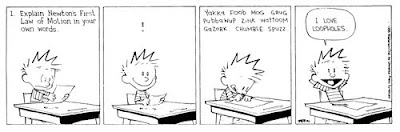
And, because Timbre did, here's a comic I like:

Monday, March 8, 2010

Planning Action Research

So, I've been revamping some of my backup plans. Here they are.

Action research is about my personal practice in my own classroom. I'm interested in changing up the production side of the class to incorporate more (smaller) documentary projects that make an attempt to tie into the critical studies portion a bit better. For example, when talking about media literacy principles relating to access, analysis, evaluation, and creation, I want them to make a media-biography that explores their own personal relationship with media. I'm interested in them exploring principles of identity in a doc project, and sense of place, and all those wonderful things that we talk about on Mondays that don't always seem to manifest themselves in their actual documentary projects. I'm interested in evaluating success in the project based on the SOTC principles we've been talking about from Multiliteracies.

If possible (obviously I will do this anyway, but I don't know if it would be possible for my thesis), I would then track how (if?) implementing these changes in TMA 458 affects Hands on a Camera instruction at all, because it's in Hands on a Camera that I find an even bigger disconnect between lessons about media literacy principles and lessons about documentary (though clearly the very process of creating a documentary is a media literacy experience, I think that the two could be even more significantly connected).

I also want to experiment with incorporating more peer to peer learning experiences, and seeing if that changes the experience as well, but it might be too many changes to implement in one semester.

Here's where I'm running into some challenges: I think that all these changes are good, and will provide me a lot to think about, but what is my concrete research question? I started with, "What is the experience of a TMA 458 student when media literacy principles and documentary storytelling are more integrated in this course?", but is that too vague?

Thursday, February 25, 2010

School as a Site for Identity Formation

As I was reading this week's reading (in the MUL book), I just kept thinking about something one of the presenters in the FutureLab session at the conference said:
"What sort of curriculum can we make for the kind of people we want to make for the kind of future we want to make?" In other words, we need to stop thinking about curriculum first (maybe we don't think about curriculum first), and start thinking first about the kind of society we want, the kind of people that we need to have in that society, and then work on the kinds of curriculum that make those kinds of people.

As mentioned in the article, we value people who are multi-layered, we seem to value the diverse workplace, and civic pluralism seems to be the model for the future (I won't go on a rant about how our country is failing in this regard here...), and we need to work on building a curriculum that allows for that sort of identity formation. School is a key place of identify formation, perhaps even as influential as the home because it is at school that students begin to figure out how their private identities operate in a public space; it is in school that students learn to navigate a world that they have little control over, how to act like themselves while working toward goals they may not have chosen. Particularly for young people who are not involved in many other social activities, school is the one of the first and main sites of socialization. So, if we want children to be socialized in an environment that creates multi-layered, multi-modal people, we need to create an environment (not just a curriculum) that allows for this type of identity formation.

I tend to get annoyed when articles make this kind of a call to action without offering some sort of possible solution for how we get there, so I appreciated that Cope and Kalantzis didn't just stop here with a call to action: the last few pages (and, really, the entire book...) function as a way to say, "THIS IS HOW WE CREATE THESE SORTS OF LEARNERS!" I've appreciated not having to read all of this book, but I almost feel like after this class is over I would like to read it from start to finish because I feel like I'm having a bit of a non-linear experience with it, but nevertheless I think that the ideas we've had around available designs and SOCT (which is the acronym I think we should all adopt) all work to help us create the kinds of students we want to create. These goals seem lofty, but it's entirely possible to tweak our framework just a bit to help students become the kinds of people they need to be.

How many words is this supposed to be? 451, right?

Wednesday, February 10, 2010

Reading Response 5--At War with Multitasking

I really enjoyed watching Digital Nation, and I am happy to say that because I had to watch it online but wanted to watch it on my TV, I wasn't doing anything else while I watched it. As I write this response, I am not listening to music (although that's mostly because it's 6:30 in the morning...), and I do not have my email up in another browser. I am single-tasking, which I think is a vocabulary word that needs to be introduced into our society; I think it can be good to multi-task (clearly lots of scholars agree), but if this is the skill that comes innately, then we need to concentrate on learning how to single-task as well. Obviously there are many issues to engage with in this film (many of the things they talk about hit very close to home for me: my first two years of high school I practically lived online; my dad used to fly those predator drones, and was actually one of the engineers who helped figure out how to equip them with missiles (a fact that simultaneously makes me proud and sad)), but in the spirit of single-tasking (and in not writing an 800 word response...), I'm just sticking to this one.

I graduated in 2007, and applied to this program in 2009. At that time, I was anxious about the application because I really felt like I had become stupid in those intervening two years; even though I was teaching a class at BYU in that time, I didn't challenge myself with rigorous reading, I didn't have intellectual conversations at the level that I did as an undergrad. I stopped requiring myself to sit down and read a text, and I definitely never wrote an essay for fun. I started engaging with media WAY more than I did as an undergrad (when I did the media log assignment in a class as an undergraduate, I often talked about films, short stories, or plays that I encountered in other classes because I didn't have TIME to seek out other media forms), but I wasn't engaging with it on the same level. I went for quantity interactions, not quality (although Michel Gondry argues that quantity is better than quality because quality doesn't last...). I became more of a multitasker, and even though it meant that I was doing more, I actually do think it made me less capable of focusing on tasks for an extended period of time.

I think we need to stop asking the question of whether or not we need to be able to multitask; clearly there are times in our lives when this is required of us. I think we do need to honestly look at data that tells us that when we multitask we are less effective at each of the activities we are doing, and decide in which situations we can live with this reality. When I'm checking my email and watching American Idol while making dinner, I don't think that my being slightly distracted has too great of an impact (as long as I don't burn what I'm cooking). The degraded quality of my work in this scenario doesn't have super high stakes. However, when I'm checking my email while trying to understand Stan Brakhage, I have a bit of a problem. We need to help students understand that there are times to multitask and times to single-task, and I think that if we approach them in a way that 1)brings the fact of their multitasking out in the open (instead of ignoring it like I am occasionally inclined to do) and 2)values multitasking as a process, that we could maybe make some sort of headway.

Tuesday, February 9, 2010

This American Media Response 4

(in the spirit of full disclosure, some of the things in this post are things I have articulated previously on my personal blog, because that's how much I love the show).

About 2 1/2 years ago, Amy handed me a bunch of iPods with microphones and said something to the effect of, "Let's use these in our media class." I figured we would do some sort of documentary project, but I had no idea what I was doing--I'd never really listened to audio documentaries, and I was just barely starting to fully understand what a podcast was.

So, I figured I'd better do some listening. A lot of listening. And that is where I found what is probably my absolute favorite media text (which makes me hesitant to write about it...): This American Life.

In an episode of The O.C. (which I don't watch), a character references TAL and another character dismissively asks, "Is that that show by those hipster know-it-alls who talk about how fascinating ordinary people are?" Her question gets pretty much to the point of what the show is about--showing how fascinating ordinary people are. This is one of the things that we talk about in our Hands on a Camera project, and I find it to be a deeply charitable notion: ordinary people have stories and are worth listening to.

I clean my house while listening to TAL, because it's a way to fill my house with meaningful voices. It helps me feel less lonely, but also helps me think more about the world. I certainly don't always agree with the people that are sharing their stories and perspectives, but I learn more about people and I find myself articulating viewpoints about important issues that I wouldn't have really taken the time to think about before. This is the thing that I find to be somewhat unique to radio: it helps us cultivate the art of really listening to someone talk (because we have no opportunity to interrupt them, no opportunity to interject our own opinion). Many of my students have a difficult time with radio, and I think it is because they haven't trained their minds to be fully engaged in something without a visual component.

If I'm ever feeling like nothing is happening in my life, sometimes I like to think, "If I were in a TAL episode, what would it be about? What would I say about these experiences? What would someone learn about me just by watching or listening to my routine?" Thinking like this has made me more willing to shovel snow in the winter, more willing to do the laundry, more willing to talk about my religion openly, because I feel like I'm revealing a character. Sometimes it motivates me to do things I really don't want to do because the character that I want to be is not the one who plays video games all the time, but the one whose life is engaged in meaningful service. So, while it's true that this motivation has a bit of a Narcissistic edge to it--I'm pretending my life is actually cool enough to be documented by TAL--it also gets me to do good things. Which is good.

This has gotten unnecessarily long, so I'll end it with this: I think that podcasting has revived radio in a major way (radio on demand), and while I think it is a venue that my students don't always get behind 100%, it's a unique medium in its ability to demand that we learn to listen. I agree with Jenkins et al. that learning to multi-task is good, but I also believe that we still need to have the ability to single-task, and listening to This American Life has helped me to do that.

Tuesday, February 2, 2010

Portrayal vs. Advocacy in Arrested Development et al.

I'm having a hard time with these viewing/using responses, because I feel like I need to contribute something meaningful to the conversation, and I often feel like my regular media consumption isn't quite up to par (don't worry media--it's not you, it's me) so I usually try to find something that offers me the opportunity to sound like a smart consumer rather than what I am, which is usually lazy.

But this week, I didn't have an opportunity to seek out anything new or different or thought-provoking. It was actually a pretty dry week for media because we spent a lot of time hanging out with my missionary brother (which is the first time in a LONG time when I've been to my parents' house and the television wasn't on the ENTIRE time. I guess that could be a blog in and of itself), so I've decided to talk about the shows that I love and my mother hates, and how I can justify liking them (wow, that was a lot of setup, probably not for an adequate payoff).

My mom and sister refuse to watch anything with the rating of PG-13 or TV14. One time when I visited her, my mom asked how I could stand to watch all those "yucky" shows. My first response is, "I don't watch ALL those yucky shows, just the comedies." That's not really the response she wanted; essentially, what she wants me to ask myself is this: how can I support and consume media that often portrays characters with values that are not my own? How can I root for Jim and Pam's love story (which is actually fairly boring now...), how can I laugh at Barney Stinson's well-dressed womanizing ways, and reconcile them with my own personal belief of chastity?

When we talk about Naturalism in TMA 114, we talk about the difference between portrayal vs. advocacy, meaning that just because someone portrays a certain kind of behavior doesn't mean that they adopt it. I think that this is the main reason that I could ever justify watching and loving a show like Arrested Development. Yes, the show is populated with terrible people, but we always know that they are terrible! I don't think that any (intelligent) viewer thinks for a minute, "Gee, I think it would be a good idea to do business with Saddam Hussein," or even, "Man, it seems completely justified to have an affair as long as it's with my husband's identical twin brother who has more hair..." While these characters are desperately trying to make their way through their various legal, mental, and physical issues, we are seldom led to believe that their actions are moral or even admirable. We come to love the characters despite these flaws (which does seem like something we should take into the real world), and we come to realize that it is fully possible to love someone and still not agree with their life choices.

I think this (along with responsible resistance) is a skill/idea that all of our students need to be aware of. Just because someone puts something in a story doesn't mean they think it's a good idea (I don't really think that J.D. Salinger thought it was a good idea for a teenager to hire a prostitute...), and just because we encounter something in a piece of media doesn't mean that we need to adopt it in our own life. We can take what we like, reject what we don't, and recognize that things that are "virtuous, lovely, of good report, or praiseworthy" are found all around us.

Monday, February 1, 2010

A Gameful of Sugar Helps the Learning Go Down

"While the boosters and debunkers may seem to be operating under completely different frames of reference, what they share is the tendency to fetishize technology as a force with its own internal logic standing outside of history, society, and culture. The problem with both of these stances is that they fail to recognize that technologies are in fact embodiments, stabilizations, and concretizations of existing social structure and cultural meanings." (Ito 90)

I love this quote by Ito, because I feel like it emphasizes that often people talk about "the media" as something that acts of its own volition, but it isn't! Okay, on with the rest of the post (which is, unfortunately for you, somewhat non-linear and wandering...I guess that's what happens when you draft a post in pieces instead of in one sitting).

In the Ito article, one game designer (I believe it was the guy who made SimCity...) made the distinction that he wished that people would talk about SimCity as a toy rather than a game. The author doesn't go into detail about the distinction between a game and a toy, but I feel like a toy is something that a child can play with and manipulate for their own purposes. Toys (at least good toys--the proliferation of toys from movies has actually done terrible things to imaginative play, but I'm thinking that's a topic for a different forum...) don't tell the player how to play with them. A toy has no rules, few restrictions, and no formula for "winning"; we just play with it. Treated in this way (as open-ended enterprises for play rather than as systems with established formulas/requirements), I think that games have tremendous potential to aide in the learning process. Number Munchers was always my favorite game during free game time (no dying of dysentery...). SimTower taught me that putting a lot of small apartments in a building can be more profitable than fewer large apartments. Zoo Tycoon taught me that I never wanted to be a manager of anything (and also that even though they require similar exhibits, placing penguins and polar bears together is always a terrible idea) because I always got sick of people complaining that there weren't enough bathrooms. Brent and I played around with the free version of Spore (which I sort of want to buy to play the whole game), and in all of his crazy creature generation we talked about what creatures would/would not survive based on the features they were given (a creature whose abundance of limbs makes it challenging to move will most likely not survive...).

For me, the big question is not, "Can students learn effectively with a game?" (but rather, "Can we construct an educational framework that acknowledges the kind of learning that is most effective in a video game?" This is not going to be another "we need to change the system!" post, yet we need to acknowledge that there is a big difference between learning in general and accomplishing curricular goals within a framework where teachers are held accountable for student performance. In Digital Natives, Digital Immigrants, Mark Prensky establishes that his preferred way of engaging 'digital natives' is to use video games in innovative ways, but I'm not completely sure that they have a place in our current system.

Tuesday, January 26, 2010

The One Where I Stop Complaining

This week's reading was delightfully practical for me, and either the reading is getting easier or my brain has finally switched on (though as I read through this posts, its disjointed nature makes me think that it hasn't switched on entirely...), because at the end of this reading I'm left feeling hopeful for education's future and new media's potential to improve our culture rather than feeling upset.

As I read, I tried to think about what this all means for me. Though I found the two articles really interesting, and I LOVE the podcasting assignment flow in the Rheingold article (really, I just loved the Rheingold article) enough that I'm trying to think of how an altered version of it might look in my classroom, I initially thought, "Well, this is really cool for a social studies teacher, but what does it mean for a media teacher like me?" Then I remembered a quote that Amy uses (for which I should probably get the full reference...) to get our Hands on a Camera teachers thinking about how Hands on a Camera affects the lives of our students:

By civic engagement we mean exercising personal agency in a public domain; and we assume that becoming civically engaged is a developmental process characterized by growing facility with ideas, situations, skills and awareness." (New Student Politics Curriculum Guide, emphasis added)

As the Rheingold article mentions, being civically engaged doesn't only mean something political; so, in helping students to think more critically about media, and to produce media of their own, I am preparing them to exercise their own personal agency in the very public domain that I'll just call the media-sphere. And that's something.

In the Multiliteracies book, I thought that the chapter was a nice synthesis (introduction?) of the various concepts that we've been discussing. I think that the distinction between language and Design is wonderful, primarily because it indicates that reading is always an active process. I also appreciated that the authors considered the various designs that we need to have an understanding of in order to negotiate our mulitmodal mediated world.

So here are some things that I take from the reading that can potentially improve my practice:
  1. I need to be more intentional about adding overt instruction and critical framing into my lectures with my students. I do a lot of situated practice (my classes are hands-on, low end production kind of classes), and I think that students have a bit of a chance to transform knowledge, but I'm not always great at being overt about why these assignments are relevant for the future teachers, or at putting them in a larger context of media literacy education.
  2. "It is...important to stress that listening as well as speaking, and reading as well as writing, are productive activities" (MUL 22). This is why we include media literacy lessons along with production lessons are important--we are always creators, even if we're not creating products from scratch.
  3. The practice of making a documentary can be even more civically engaging than we are currently making it. We might want to consider giving the students a little more instruction as to the purpose of their documentaries (if Hands on a Camera could become a semester and a half program like I REALLY want it to, maybe we could do a more structured documentary followed by a more open-ended assignment...).
  4. Focusing on Non-fiction production seems to fit more into the post Fordist economic model, where one student is in charge of many different roles (as opposed to the highly specialist-driven areas of fiction production. I know how to dress sets really well, but don't ask me to schedule your film or direct actors...).
So...that's that. I liked this week's reading a lot because the authors offered potential answers to their own questions. Maybe I'm just lazy and I don't want to have to work through tough processes in order to find answers, but it was refreshing to have someone say, "Here's the issue...and here's what we can do about it!" If/when I write something like this, I want to have some possible answers in hand. Not all the answers, but at least some.

Monday, January 25, 2010

This I Believe (About Media)

I'm still getting used to our posting schedule.

This week I've done mostly reading of the copy-editing variety, and even though it's sort of lame, one of the articles that I read caused me to really think about my theory and practice of what media can and does do for me in my life.

The article in question (which will be available in the February issue of the Journal of Media Literacy Education, which I think I have to plug at least once a semester) discusses the beliefs of English teachers about what English does for their students. The whole concept is very interesting to me--the notion that our ideas about education (and thereby, our actual practice) can arise from a system of beliefs rather than rational experience initially seemed like a stretch, but the more I read, I can definitely see the author's point (it also helped that I didn't have to see a lot of grammatical/citation errors). The author talked about how teachers believed that literature cultivated higher level thinking skills and cultural literacy that their students would need later in life. They believed that forming a relationship with a book--an actual book, not an electronic document--could change a student's life. They believed that studying the "universal human truths" manifested in the canon (even agreeing on a canon requires some belief about what is 'good' literature) would allow their students to grow. These beliefs simultaneously made the teachers passionate about their subject matter, but also made them resistant to the idea of examining other sorts of texts, which is a problem for media literacy.

Believe it or not, that's just the introduction. Reading this article made me question my own beliefs about what media can do for me, what it can do for students, and it made me question my own practice in relation to those beliefs.

I believe that media can help us form connections with those closest to us by giving us a common experience.

I believe that media can help us form connections with those far away from us; we engage with differing viewpoints, and see the world through eyes that are not our own.

I believe that media can help us learn things about ourselves.

I believe that media can be intellectually stimulating and spiritually enlightening.

I believe that the ability for media to be all these things for us--a connecting point, an object of study, a lens through which to see the world--rests firmly and solely with the viewer/reader/listener. Though I do believe that some media are inherently more valuable than others, it is always the responsibility of the reader to make something of the media.

So, that's what I believe about media. Now what do I actually do with media? At this point, I would say that about 70% of my media consumption is just that--consumption. To some degree it's an activity that I enjoy with my husband, so that's something, but when I'm sitting around watching Chuck and reading my textbook during commercial breaks, I'm not thinking about the way that Chuck might help me connect more with others. I don't believe it helps me understand spy culture (although if that's what spy life is really like, I feel sympathy for spies), and I don't know that I'm really being intellectually stimulated. The same goes for most of NBC Thursday (though Community really makes me love people. Seriously.). In some ways, I'm no better than those English teachers who forbade "TV Talk" because they found it intellectually inferior, though I don't think the source is necessarily inferior; I am.

I'm a little better with films, and a lot better with anything I listen to on the radio (bear in mind that I only listen to NPR, or KSL radio if it's late at night and I need something that will make me furious enough to stay awake because KUER has switched to 'Nighttime Jazz'). This is probably because I've made myself become a disciplined film viewer through four years of film school, and I turned to NPR because I was sick of listening to the same 12 songs over and over and wanted something more intellectually stimulating as I drive. In doing this, do I really showcase that I value some media more than others? Is that okay? (I think the answers to those questions are, "yes," and, "yes, as long as I don't try to force others to feel the same way.").

It's interesting to think about our own beliefs about media, and to examine our actual practices in accordance with our beliefs. I think this would be a good activity to do with students in an introductory lesson in a media literacy unit: what do you believe about media? How do you typically use media? What different purposes do you assign to different media forms?

And while we're talking about beliefs, I played around on Wordle and made a word cloud of my testimony. I like the way it looks, and it proves to me that sometimes design toys like this can be at least somewhat spiritually enlarging.

Tuesday, January 19, 2010

Unexpectedly Uninformed

When Amy and Amberly and I were on the radio (since it probably won't happen to me again, I've got to get all the mileage I can out of it...), the host asked me if I ever felt like the Hands on a Camera students already knew everything that we were teaching them in regards to media. Obviously my first answer would be, "No," since if I really felt that way we wouldn't really engage in the project at all. I think that the answer I actually gave was that I felt like a lot of the things that we taught the kids were things that were fairly intuitive to them, but that didn't mean that they didn't need guidance to be made aware of the fact that they actually knew it.

I feel like this is the case with youth and new media: there are things they know, things they understand, but that doesn't mean that they don't need good pedagogical strategies to help them learn, and it seems like this where we hit a wall. We talked about it last week, and the reading this week (of which I've actually done only about half of at this point. Too many things to read, not enough time!) also confronts the issue head on: how do we change our communities of practice (since not learning happens in classrooms) to reflect the seismic changes in society brought about by the influx of new media and new media technology? The things I've read so far don't really give very many answers to these questions (which is fine, though frustrating at times), inviting practitioners to take this knowledge and do with it what they will.

In "Multimodality", Kress aptly discusses how we are inherently multimodal beings, and our educational system has done us very few favors by placing ultimate primacy on the written word. I believe that the issues brought up in this chapter (which I can't even believe was written 10 years ago, because it seems so relevant) are particularly relevant when trying to decide how to change our classrooms: students need pedagogical strategies that reflect our multiple modalities, because we increasingly communicate in multimodal ways. We need to stop seeing areas like visual art and music as separate, specialty interests in school and start recognizing that these are areas of literacy just as important as print literacy.

The need for solid and relevant pedagogical (I'm pretty sure I've already used that word at least 3 times...sorry) strategies was made quite clear in the Seiter article, whose unabashedly pessimistic tone made it clear that introducing technology into the classroom is not the end-all fix-all solution that some people (even myself, on occasion!) seem to think it is. Her article makes apparent what most of us know but try to ignore: in our knowledge economy, rich kids always have a leg up on working class kids. Fixing schools is a step in the right direction, but even if every school had equal access to technology, the vastly different home lives of students from different socioeconomic classes will still be a barrier to true equality. I love her closing statement: "Technological utopianism is past: we need to be clear and precise about the goals and the feasibility of technology learning, in the context of a realistic assessment of the labor market and widening class divides, struggles for fair employment in both technology industries and other job sectors, and the pressing need to empower students as citizens who can participate actively in a democracy."

Though Seiter is pessimistic, this doesn't mean that there aren't any solutions. I think the solution begins in recognizing what strategies we already have in place that are worth hanging on to. It also involves recognizing the new skills that all students need, and allowing them the time they need to practice them (though this will not result in completely fluency for all students, it's a start). It means finding the ways that we can encourage multimodal literacy practices to prepare students to find ways to communicate effectively.

Monday, January 18, 2010

I Own Both the Care Bears Movies.

This week I was looking for material to use in one of my classes, and I spent some time looking at Post Secret. For those of you who don't know, it's a website where people anonymously mail in homemade post cards with secrets on them, and then the person they're mailed to puts them up on a blog to read. I was looking at them to possible use to demonstrate my six word memoir assignment, but since hardly any of them are only six words it didn't really work out, but the concept is still engaging to me.

The notions of public and private interact here in really interesting ways. I feel like this flux of new media technology, along with a desire to be "known", have made people more interested than ever in having their private lives made public (but only in ways that we control). I already mentioned this in class on Thursday--there is a part of me that wants to be known, to be read by a lot of people (although if I really wanted that I would change my writing style slightly so as to not be so clearly for people who know me, and if I REALLY wanted it I would try to advertise and get the word out, and I'm really not willing to do that). What makes me want this? Does the desire to be known have anything to do with the various new communicative tools that we have at our disposal, or is it simply more pronounced because anyone can post anything online? Why do we (and maybe "we" as a cohort don't, but "we" as a society definitely do...) want our personal lives public in the first place? This constitutes an anonymous but deeply personal leap into the world, and at what point is interaction with it inappropriate? Am I a voyeur for looking at these secrets, even though they're freely offered? Am I nosy if I respond to them in comments (which I don't, but other people occasionally do)? What happens if I recognize a secret mailed in by someone I know (which will probably never happen...)?

The other thing I notice while looking at Post Secret is the way that we as a culture are becoming more and more adept at telling stories in very few words. I don't think it's because of Twitter, but I definitely think that the goal to say something in 140 characters or less, combined with prolific texting, has definitely influenced the way that we communicate, particularly online. At a time when films are getting longer and longer (though I think that no matter how great the film, we're maxed out at three hours, and I think it will continue to be so), our personal stories are getting shorter and shorter, as if whole aspects of our personalities can be condensed to sound-bytes. I don't know how I feel about this.

I feel like I've sort of covered how I would use this in a classroom, but just to be explicit, here are some things I could potentially use Post Secret for:
1. A discussion of the ways that image and word work together to create a story (this is what I was originally looking at the images for).
2. A discussion of the personal/private space discussion in relation to online interactions.
3. A discussion of short form storytelling.

And in case you didn't figure it out, my secret (that I'm okay with you knowing) is in the title. It's not a good one, it's just what I could think of at 6:30 in the morning.

Monday, January 11, 2010

Dialogue, Discourse, and Connection

I'm going to be honest, finding the connection between these articles was a little difficult for me. That said, each article had at least one concept that I really felt I latched onto:

Gee: "People as portfolios"(mentioned first on page 43, but several times after that)
Boyd: People "write themselves into being"on social networking sites (129).
Goldman et al: "Technologies, as communicative vehicles, serve as platforms for dialogue, discourse, and connection." (203)

Gee's article was at times fascinating to me and at times boring (can I say that a reading assignment was boring?). I loved the discussion of New Capitalism and how it requires a different kind of worker, and I REALLY loved it when he talked about ways that those reforms actually influence classroom practices. I don't doubt that the discussion of language etc. was relevant, it was just a little over my head. What I pulled from his article is this: our economy has drastically changed what it requires of (most) of its workers, demanding not that we become experts at a task and perform it well, but rather that we become "expert at becoming experts" (48) in a model that allows for adaptation and flexibility.

Things constantly change in our knowledge-based economy, so that it feels like it's more important to learn how to be a learner than it is to learn any specific skill. This notion of adaptability and flexibility seems to apply particularly to my field of study; I have chosen a field (and I guess since we're all here, we all chose it!) that is constantly in flux. The article on Social-Networking (speaking of which, did anybody else pity the researcher(s) who must have needed to spend hours lurking on teen's profiles on MySpace? There's nothing quite like online ethnography to make you feel like a creepy stalker...) inadvertently demonstrated this: any discussion of social networking needs to include Friendster, but who even uses Friendster anymore? The only reason I even know about it is from reading articles and watching Saturday Night Live. To understand current practices in social networking (which I really don't...), you don't only need to know Friendster, you need to know MySpace, Facebook, Flikr, and probably sites like Ning (my students laugh at me every time I mention Ning...) and LinkedIn. Many of these are completely different than when this article was written. Gee's notion of constantly adapting our knowledge base and skill set certainly applies in this discipline.

I did wish that there was more discussion of how these new developments actually affect our classroom practice. I loved the discussion of reciprocal and jigsaw teaching, and what I think I actually wanted to read was more of a discussion about specific pedagogical strategies to engage these new identities. How does the notion of youth "writing themselves into being" in spaces like MySpace change the way we act in the classroom? It is inarguable that these developments change the way that youth relate to one another and their teachers, but how does that affect the classroom? The media mentioned in the Goldman article, though interesting, seemed less important to youth social development than the social and cultural technology they described (which has little to do with media as I tend to think about it).

This is way past 300 words, so I'll end with this: I wish my personal portfolio included some sweet guitar-playing skills.